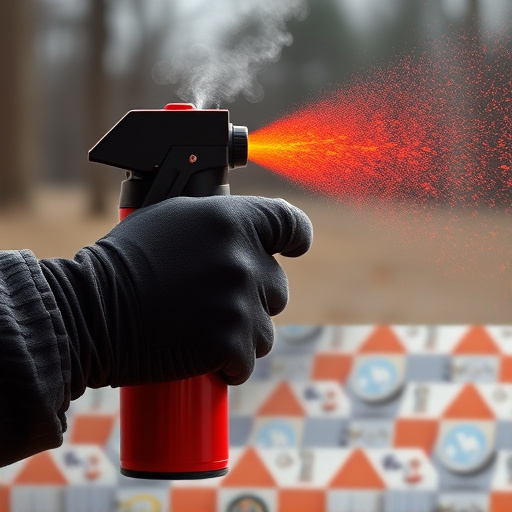
The effectiveness of pepper spray for riot control hinges on understanding Pepper Spray Distance and Wind Factors. In open areas, wind patterns can extend reach or dissipate spray; urban environments introduce complexities due to buildings and vegetation. Training is crucial for law enforcement to master deployment techniques, aiming for eyes and faces while accounting for wind direction, ensuring safe and targeted use without collateral damage.
In the realm of public safety, understanding pepper spray mechanics is paramount for effective riot control. This powerful tool, designed to incapacitate without permanent harm, operates through a complex interplay of chemistry and aerodynamics. This article delves into the science behind pepper spray, exploring critical factors such as wind patterns and spray distribution, optimal deployment strategies, and essential safety considerations and training protocols. By examining these key elements, including Pepper Spray Distance and Wind Factors, we gain valuable insights for responsible use in challenging situations.
- Understanding Pepper Spray Mechanics
- Factors Influencing Effective Range
- Wind Patterns and Spray Distribution
- Optimal Deployment Strategies
- Safety Considerations and Training
Understanding Pepper Spray Mechanics
Pepper spray, a common tool in riot control and crowd management, works by irritating the eyes, nose, and respiratory system. Understanding how it functions is crucial for effective deployment. The active ingredient, capsaicin, is a natural compound that triggers pain receptors, leading to temporary blindness and difficulty breathing. This disruption can quickly de-escalate tense situations.
When considering pepper spray mechanics, distance and wind play significant roles. Pepper spray is most effective when used within a certain range—typically around 2–4 meters (6–13 feet)—to ensure it reaches the target area without spreading too broadly. Wind direction and speed are also critical factors; tailwinds can carry the spray away, while headwinds may limit its reach. Proper training allows law enforcement officers to accurately gauge these variables, maximizing the spray’s impact while minimizing off-target effects.
Factors Influencing Effective Range
The effective range of inflammatory spray, or pepper spray, for riot control is influenced by several key factors. One of the primary considerations is pepper spray distance and wind factors. The reach of the spray can vary based on the user’s proximity to targets and the direction and strength of the wind. In open areas with little wind, the spray can travel further, potentially affecting a larger group of people. Conversely, in windy conditions, the spray’s trajectory becomes unpredictable, making it less effective over long distances.
Other environmental factors, such as temperature and humidity, also play a role. Warmer air temperatures can cause the spray to dissipate faster, while colder weather may solidify its content, affecting application and range. Humidity levels influence how quickly the spray evaporates, with higher humidity potentially reducing its effectiveness over time. Understanding these pepper spray distance and wind factors is crucial for law enforcement and security personnel in planning and executing riot control strategies effectively.
Wind Patterns and Spray Distribution
Wind patterns play a significant role in the effectiveness and distribution of inflammatory spray, such as pepper spray, during riot control situations. The direction and speed of wind can greatly impact how the spray disperses, affecting both its reach and concentration at different distances. Understanding these factors is crucial for tactical planning. When wind is blowing directly towards officers or protesters, it carries the spray particles faster and further, increasing the risk of exposure. Conversely, an opposing wind may help to contain the spray within a specific area, but it can also cause it to settle unevenly, with higher concentrations in some zones.
The interaction between wind and spray is complex, influenced by various factors like terrain, building structures, and vegetation. For instance, narrow alleys or dense urban areas can create microclimates that alter wind speed and direction, potentially leading to unexpected spray patterns. Officers deploying pepper spray must account for these wind-related variables to ensure optimal control of the situation while minimizing harm to non-target individuals. Effective strategic planning considers both Pepper Spray Distance and Wind Factors to maintain a safe environment for all parties involved.
Optimal Deployment Strategies
When deploying inflammatory spray for riot control, understanding pepper spray distance and wind factors is crucial for optimal effectiveness. The range of these agents varies widely, typically between 2 to 10 meters (6.5 to 32.8 feet), depending on the type of spray and environmental conditions. Wind plays a significant role in dispersing the spray, with lighter breezes aiding in even distribution but stronger winds potentially blowing the agent back onto the users or into nearby buildings.
Strategic positioning is key. Law enforcement agencies often recommend aiming for the eyes and face to maximize disruption and deterrence. In open areas, deploying agents at a slight angle upwind can help control the spread while minimizing collateral damage. In crowded urban settings, shorter-range sprays might be more suitable to prevent agent overload and ensure targeted use, especially considering the risk of pepper spray blowing back due to wind patterns.
Safety Considerations and Training
When employing inflammatory spray for riot control, safety considerations are paramount. Law enforcement agencies must rigorously train officers on proper usage techniques to ensure minimal harm to both the public and the officers themselves. The pepper spray distance and wind factors play crucial roles in effective and safe deployment. Officers should be trained to assess wind direction and speed, as these variables can significantly impact the spray’s range and accuracy. Exceeding the recommended pepper spray distance can lead to off-target effects, causing harm to bystanders or other officers. Adequate training includes practicing different scenarios, including windy conditions, to master precise application techniques that minimize risks while maximizing control capabilities.
Pepper spray, a powerful tool in riot control, operates by understanding wind patterns and optimal deployment strategies. By considering factors like Pepper Spray Distance and Wind Factors, law enforcement can maximize its effectiveness while minimizing harm. Training is paramount to ensure safe and strategic use, making pepper spray a valuable asset when navigated responsibly.